

Hungarian Holidays
By Maria Stambler, November 2018
It’s been a long fall term so far but, holiday season is almost upon us! Many of us are already imaging ourselves back home with our families or traveling to some exotic, new destination. However, some of us might be stuck in Budapest for the holidays - but that’s no reason to despair because Hungary has plenty of interesting destinations so why not use this time to get to know the country better?
BALATON
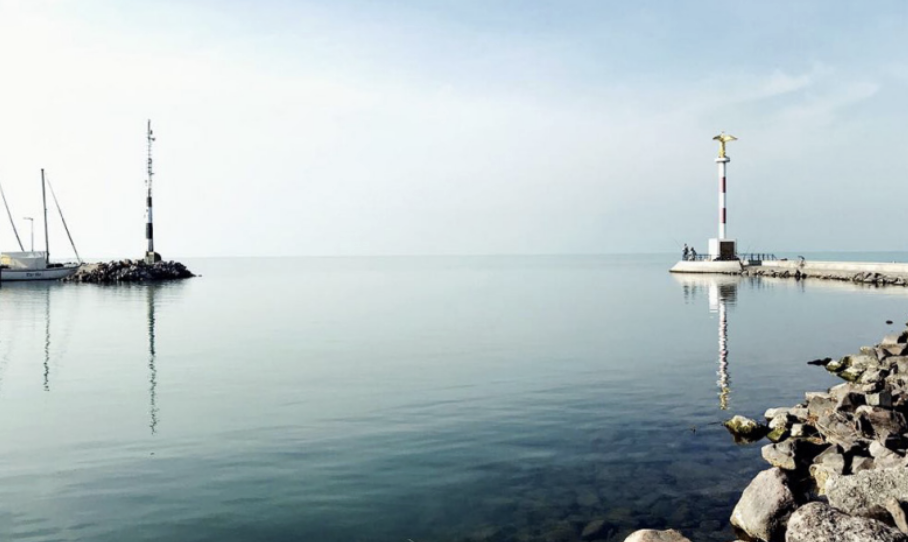
Although Hungary’s biggest and most scenic lake is a magnet for the whole country during the summer months, in winter it has a very different sort of charm—and A LOT less people. Although getting beachy is not the best idea in December, you can rent a bike and go around the lake exploring the different villages—each with its own special atmosphere. In the winter, the lake sometimes freezes and that’s when ice skaters and ice boaters take over. Getting around by train is also an easy and cheap option.
We’d recommend visiting the incredibly picturesque small village of Tihany (on the Tihany Peninsula) because thanks to its location on top of a hill, it has the best over the whole lake.
It’s also home to the Benedictine Tihany Abbey, which was founded in 1055 AD by András (Andrew) I, who is buried in the crypt. Balatonfüred, a favorite holiday destination among the Hungarian aristocracy back in the day, today is the de facto capital of the Northern Shore and is a very clean and well-maintained destination for the more affluent visitors who are interested in yachting and sailing. It’s got lots of trendy restaurants, bars and shops along its beautiful lakeside promenade. Siofok (on the southern shore) is Balaton’s party capital and the biggest town on the lake so it’ll be quite alive even in the winter. To really get away from it all, head towards the furthest end of the lake to Hévíz and Keszthely. The former is home to the world’s second largest thermal lake so you can soak away the stress of fall semester and improve your health here, while the latter is a large town that boasts a wide range of architectural gems displaying Gothic, baroque, Transylvanian and eclectic styles.
EGER
This city of some 54,000 inhabitants is also one of Hungary’s most important wine regions and a treasure trove of baroque facades. History buffs can spend hours exploring the bloody history of Turkish occupation at the hilltop castle or climb an Ottoman minaret; culture vultures can enjoy an organ performance in the colossal basilica; and hedonists can relax in a renovated Turkish bath or head to the Valley of Beautiful Women to taste the famous “Bull’s Blood” (Egri Bikavér) red wine and other fine local wines straight from the cellars. If you come for more than one day, venture out to nearby Bükk National Park to go on a wintery hike and be one with nature. All this just 1.5 hours from Budapest by train!
VISEGRAD/ESZTERGOM/SZENTENDRE
The Danube bend is a gorgeous area that hugs the Hungarian-Slovakian border and is surrounded by historic and picturesque cities like Visegrad, Esztergom and Szentendre. Visegrad’s main attraction is the medieval, triangular shaped Castle of Visegrad, called the Citadel. The partially reconstructed castle sits atop the 333 meter high steep hill soaring over the river Danube Bend, and features medieval exhibitions, wax works, and, of course, stunning views that are worth the trek up. A bobsled track is 10 minute walk from the castle so you can get a bit of history and fun! Finish the day off at the Zugfozde Palinkamuzeum with a few (or more!) tastings and historical insights.
Esztergom is the center of the Hungarian Catholic Church because it was here that St. Stephen, the first Hungarian king, was crowned in 1001. The Esztergom Basilica—the town’s main attraction—contains a small treasury, where the actual skull of St. Stephen himself can be seen. The town also has a lovely waterside promenade with dazzling views of the Danube any time of year.
Finish off your tour of the Danube bend with the quaint and artsy village of Szentendre. The town’s got dozens of art museums, galleries and churches to keep you busy the whole day—and it’s good that you’re going in winter because in the summer it can get too crowded. The towns of the Danube bend can be combined into one trip that is easily doable by train from Budapest.
