

The day Roma people tell the world who they are.
Written by Michal Mizigar
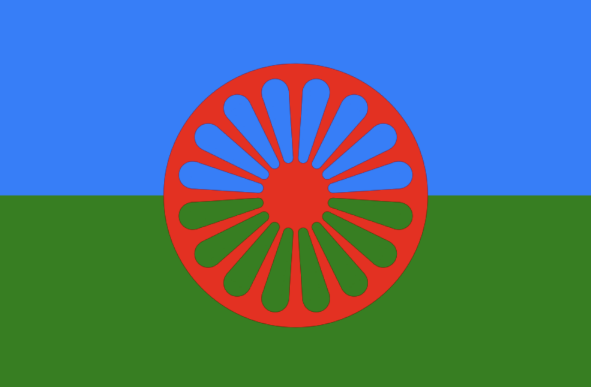
Every year, the International Day of Roma people is celebrated on April 8th. Roma people (often called by many all over the world pejoratively as “Gypsies”) celebrate this day as their holiday. This day was declared a holiday in 1990, as a tribute to the founding of the International Romani Union in Orpington near London in 1971.
First of all, allow me to share with you why this day is so crucial for all Roma people. This day brings a huge message to all Roma people. International Roma Union is the first official institution founded by Roma people and their non-Roma friends. It is the first moment when Roma people could meet in Europe, closed by borders of empires and regimes of the 20th century. This was important because for centuries many Roma had either been declared as outlaws or enslaved, persecuted in all Europe and faced genocide.
From this meeting, Roma people started to use an international Roma flag, Roma anthem Gelem, gelem and using the word Roma as an umbrella name for all Roma subgroups (Romanichals in England, Manush in France, etc.), except for Sinti living in Benelux and Germanophone countries who are known by an appellation of Gypsy, Cikán or Cigan which are also pejorative.
The difference between Roma and Gypsy and Cikan/Cigan lies mainly in origin. The ancestors of today Roma living in India are called Doms, and after the exodus, the name changed in Armenia to Lom and in the Byzantine empire, this word changed into the final version, Rom. For example, the Spanish word “gitanos” and the English “gypsy” comes from Egypt Minor. Another appellation, “Cigan,” used in Slavic languages and in German as “Zigeuner”, comes from the word “Athinganoi” — a slaughtered heretic sect likened to the Roma people since they provided similar services, such as palmistry and sorcery, a traditional craft for women coming from certain Roma subgroups.
However, both exonyms have always been pejorative. As an evidence that these words were given to Roma people by the others, we can use Roma language which does not contain both above mentioned exonyms. Even though Roma people call themselves while speaking other language “Gypsy” or “Cigan” they do not use it in Roma language. I can say in Romanes I am a Roma “Me som Rom.” That is why I consider this moment as a milestone when Roma people on April 8, 1971 declared themselves as Roma people, because they did not have any opportunity to do so throughout the centuries due to belonging to the lowest group of the societies.
The word Roma could be used officially in post-communist countries after the fall of the Iron Curtain. The using the word “Gypsy” or “Cigan” by non-Roma people, we perceive as contempt of Roma people, despite the fact that some Roma people call themselves while speaking the non-Roma language of the countries where they live. In Europe, Roma people still do not know their history; at school, they do not learn about themselves. The only information they can access are from media, underpinning stereotypes, prejudices, and discrimination towards Roma.
At 12 million, Roma represent the biggest minority in Europe. Unfortunately, only 3–4 million speak the several various dialects of Roma language. Most of them live in poverty and face discrimination mainly in the sphere of education, housing, health care and in the labour market. Roma culture and language are many times represented as the culture and language of poverty, crime, and imperfectness. However, there are Roma people who manage great feats even though the majority of societies do not know about them.
There are Roma as top-level sportsmen, for example, female gymnast Dana Beránková-Gažiová represented Czechoslovakia in the 1980 Olympic games in Moscow. One of the most famous Roma writers Mateo Maxmoff’s Ursitory was translated into several languages. And many know that guitarist Django Reinhardt was a Roma man. Brazilian president from 1956 to 1961, Juscelino Kubitschek de Oliviero, had Roma roots. In the movie industry, the most well-known people with Roma origin are Charlie Chaplin and Johnny Depp.
Roma people not only in Europe but all over the world face an even bigger problem, a problem of hidden identity. Many Roma people are ashamed of their origin and create alternative stories of their origin to tell their children, who may not be aware of their identity, for fear of losing their job or being exposed to discrimination. Today, successful Roma people are not considered as Roma. Many of us are used to hearing from non-Roma friends and other people “But you are not as the others, you are an exception.” In this way, we, Roma people, lack positive role models and partners in the common fight for our basic human rights. It is a vicious circle from which is difficult to extricate oneself from this.
Most of Roma people think that speaking their language is indecent or unsuitable. The positive news is that the number of Roma students rapidly increases which will create a middle class of Roma people which will have the power to support the rest of their community.
I would like to appeal to you, the CEU community, as people who will make important decisions in future in their countries and change the world to aim for greater cooperation with us, Roma people. Many strategies of integration of Roma people into society or other projects pertaining to the situation of Roma people have been realized. All those activities without Roma people or with Roma people as a guise ended as a fiasco. I am really happy and lucky to be in such environment of open-minded people as is our university, therefore, I dare to appeal you for it because I believe that you will, one day, consider us as equal partners in helping to improve the situation of Roma people and mutual coexistence between Roma people and the rest of society. I believe, that you could as well help us to tell the world who we are.
